
How To Cool Off Your Hot Deck
By Dave KileOn a sunny day, I know I enjoy being on the deck at my home. I’m sure you are the same, but sometimes decks can get hot as the temperatures rise.
Under direct sunlight, temperatures on composite decks can get around 24°C (75.2°F) hotter than the ambient air. During hot summer days, deck temperatures can reach over 65°C (149°F). Although PVC decking does get hotter than treated decking, its temperatures will vary based on the location, shade, time of day, and decking material.
Avoiding your deck should not be your solution.
You can cool off your hot deck with tips I’ve learned from the decking industry over the past several decades. With these suggestions, you can keep your deck cool and comfortable all summer long, regardless of your climate.
Why Is My Wood Deck So Hot?
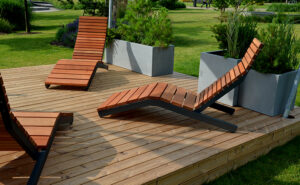
Decks heat up for the same reason any outdoor surface does: they absorb solar radiation. The more direct sun exposure your deck gets, the hotter the boards become. Colour, material density, airflow, and the angle of the sun all influence how much heat the surface holds. Darker boards absorb more light, dense materials store heat longer, and still air slows cooling. On a calm, high-temperature day, any decking material will feel significantly warmer underfoot.
Placement also matters. Decks facing the north or west (in Australia) tend to receive the strongest afternoon sun, which can quickly push surface temperatures up—especially if the boards are darker.
Ambient heat plays a major role as well. During long stretches of summer weather, deck boards can hold onto warmth into the evening, making the surface feel hotter for longer. Limited shade or overhead covering intensifies this effect because the boards remain exposed throughout the day without any relief.
Why Is My Deck So Hot?
Decks heat up for the same reason any outdoor surface does: they absorb solar radiation. The more direct sun exposure your deck gets, the hotter the boards become. Colour, material density, airflow, and the angle of the sun all influence how much heat the surface holds. Darker boards absorb more light, dense materials store heat longer, and still air slows cooling. On a calm, high-temperature day, any decking material will feel significantly warmer underfoot.
Placement also matters. Decks facing the north or west (in Australia) tend to receive the strongest afternoon sun, which can quickly push surface temperatures up—especially if the boards are darker.
Ambient heat plays a major role as well. During long stretches of summer weather, deck boards can hold onto warmth into the evening, making the surface feel hotter for longer. Limited shade or overhead covering intensifies this effect because the boards remain exposed throughout the day without any relief.
Does Composite Decking Get Hot?
Composite decks – as well as any type of decking materials – can get hot. Unstained or light-stained wood may be the coolest deck option, but just slightly so. Even it gets hot under high outdoor temperatures and direct sunlight. Older generation composite decking materials tend to absorb more heat than newer generation, which is less sensitive to heat.
Whether composite or wood, decks exposed to full sun can’t escape the effect of the rays. Choosing new materials and lighter colours offers the best protection, along with rugs, shades, or plants.
Which Decking Materials Get the Hottest?
Different decking materials absorb and release heat differently. Density, colour, and surface texture all influence how hot a board feels underfoot. Below is a simple comparison to help you understand how common options perform in direct sunlight.
Decking Heat Comparison Table
| Material | Heat Retention | Typical Surface Condition in Sunlight | Barefoot Comfort |
| Treated Pine | Moderate | Can get noticeably hot | Warm to hot; may need sandals on peak-sun days |
| Merbau | Moderate to High | Can reach high temperatures due to density and dark colour | Often hot underfoot; footwear recommended in peak sun |
| Spotted Gum | Moderate | Warms significantly but usually less than Merbau | Warm to hot; lighter boards are generally more comfortable underfoot. |
| Composite | Moderate to High | Often 20–30°C above ambient | Can be hot in dark colours; some premium composites like Trex are engineered to absorb less heat. |
| PVC | Moderate | Similar to or slightly cooler than composite | Warm to hot depending on colour and airflow |
| Aluminium | Low | Stays near ambient temperature | Very comfortable; rarely too hot |
8 Tips To Cool Off A Hot Deck
I recommend a variety of methods to homeowners to cool off their hot decks. These offer effective solutions during the peak of summer heat. You can enjoy comfortable outdoor entertaining and lounging using these effective deck cooling solutions.
Cool off with water

I have found that the fastest and simplest method to cool off a hot deck is to use a garden hose and sprinkle the deck with cold water. Keep spraying for a couple of minutes. The cold groundwater will absorb some of the heat and carry it away.
There is also water evaporation, which keeps the deck boards even cooler. After the water evaporates, respray the deck.
Using cooler deck boards
If you plan to get a new deck, I suggest really thinking about the material. Treated pine can warm up quickly, especially in darker stains, while hardwoods like Merbau also often run hotter because of their colour and density. Lighter Spotted Gum, for example, tends to be more moderate because it reflects more sunlight. Choosing a lighter-coloured timber or a material that absorbs less heat can make a noticeable difference in summer.
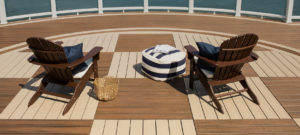 Composite decks are low-maintenance, which I know is a main reason homeowners choose this option. But they can get warmer than wood deck boards unless you get newer, higher-quality composite deck boards, like the latest heat-mitigating decking from Trex.
Cover with outdoor rugs
To combat the sun’s heat when it’s at its highest, consider revamping your outdoor space. Outdoor rugs are an excellent option for insulating your feet while adding décor. I like to encourage using rugs to make your deck stand out, define the space, and bring the rest of the decoration together.
The best outdoor rug material is polypropylene. It is versatile, durable, and doesn’t absorb water. Polypropylene protects your deck from full sun and is highly usable on different deck surfaces.
The worst outdoor rug materials are latex, vinyl, or rubber. I would steer clear of those! They hold moisture, could trigger mildew and mould build-up, and stain your deck. Stains can be difficult to remove.
Using umbrellas, awning, wind sails
 Many homeowners add outdoor furniture to cool off a hot deck, such as using wind sails, awnings, and umbrellas. Wind sails can be a more permanent solution. Wind sails use a thin blanket that covers the entire deck, dims the sun, and offers a cooling effect.
The installation process takes longer, but I find the product offers ample coverage. An awning is much sturdier than wind sails. You attach the covering to an exterior wall of the house and extend the living space.
Umbrellas are movable, versatile, and lightweight coverings. You can pack them away whenever you don’t need them. Patio umbrellas are an excellent choice for homeowners who live with varying weather conditions, but umbrellas provide only limited coverage. It’s a good idea to check out all kinds of deck shade ideas to find the one that can accommodate your needs.
Using floor cooling misters
I have seen an increased use of outdoor misting systems, which can lower body temperatures and cool the surrounding air. As a result, misters can improve thermal comfort across different areas. Statistics show that the mean radiant temperature is 7.6 °C (45.7°F) lower in misted areas.
Here is how it works. Misting systems use an evaporation technique to cool air. The misters come with nozzles that spray cold water droplets into the air. These droplets become gas or water vapour that cool the air and related areas like your hot deck. But you can increase comfort even more when combining misting systems with shade, such as canopies or an awning.
Patio cover or pergola
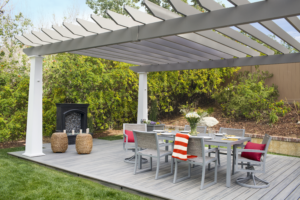 Countless homeowners are choosing to install patio covers. They add property value, excellent aesthetics, and protection from the summer sun. In addition, these covers fully protect the outdoor living space, making them a permanent addition to your home.
I think ceiling fans are the most popular add-ons for patio covers. A ceiling fan can decrease the temperature in a semi-outdoor or outdoor space. Installing it on a deck can push cool air down and circulate the air.
Pergolas are more affordable, and you can customize them for smaller spaces and use them when planting climbing plants. If you are worried about a pool deck, I suggest using a pergola to cover the poolside lounge.
Add tall plants around the deck
I know it may not be the first thing homeowners think about, but a simple way to cool off a hot deck is to plant trees and plants nearby. You can also get creative and add DIY décor together with the plants. Plants can provide shade and decrease temperatures. When plant-scaping the deck, you can take full advantage of your free space.
Potted plants are low-maintenance and versatile options that can create dimension and add some shade. But, of course, the larger the plant, the bigger the shade. Common backyard choices like jacaranda, lilly pilly, or crepe myrtle can grow into great natural shade providers.
Painting deck with lighter colour
A deck with a mahogany colour, black, or dark blue colour often gets hotter than a wood deck with a slate colour. If you want your deck to be cooler or if you live in an area where the summer heat gets too strong, opt for a lighter colour.
I recommend lighter-coloured deck boards, such as light grey, solid white, ivory, or taupe, as a more practical choice. An added benefit is a white-coloured scheme makes a small space look bigger.
Frequently Asked Questions
Here are some of the most common questions I hear from homeowners about deck heat and comfort.
Does Composite Decking Get Hot?
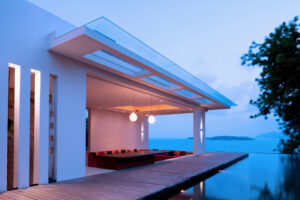
Composite decks – as well as any type of decking materials – can get hot. Unstained or light-stained wood may be the coolest deck option, but just slightly so. Even it gets hot under high outdoor temperatures and direct sunlight. Older generation composite decking materials tend to absorb more heat than newer generation, which is less sensitive to heat.
Whether composite or wood, decks exposed to full sun can’t escape the effect of the rays. Choosing new materials and lighter colours offers the best protection, along with rugs, shades, or plants.
Is composite decking hot on feet?
Composite decking can burn your feet if the local temperature is too high. Composite decks can reach over 23°C (73.4°F) higher than the ambient temperature. That means when the weather outside is 26°C (78.8°F), the deck can reach 65°C (149°F). This makes it impossible for you to walk on it with bare feet.
Does Trex® Decking Get Hotter Than Wood?
In all my time working with Trex® decking, I have a lot of experience comparing composite to traditional wood. Composite decks are known for being low-maintenance, resistant to warping and splinters, and have excellent warranty. But like any material in the sun, it can – and does – get hot. Hotter than wood? Well, that depends on the type, density, and colour of the wood and the type, style, and colour of the composite deck boards. In general, composite decking materials do run hotter, but not drastically so, and much can be done to combat these effects.
How do I keep my deck furniture from getting hot?
One of the easiest ways to prevent hot furniture is to keep items shaded during peak sun. Use outdoor rugs beneath metal pieces, choose lighter-coloured cushions, and position furniture under umbrellas or pergolas whenever possible. Materials like aluminium and wicker tend to stay cooler than steel or iron. Storing cushions in a bench box, under a pergola, or on a shaded section of the deck when not in use helps keep them cooler.
Does watering my deck damage it over time?
Occasional hosing to cool your deck won’t cause damage. The key is proper drainage. As long as water can dry quickly and your joists are protected with a waterproof tape like Trex Protect, light watering won’t negatively impact the structure. Avoid allowing water to pool against the house or under the framing, and make sure your deck has the correct slope to shed water efficiently.
Are there color options specifically made to minimize heat?
Yes. Many manufacturers—including composite and PVC brands—offer lighter shades designed to reflect more sunlight and reduce heat absorption. Colours like light grey, tan, or ash are noticeably cooler underfoot. If you’re building new, it’s worth reviewing material palettes when you build a deck to help keep temperatures comfortable.
Conclusion
Just because decks can get hot, you don’t have to avoid them. Taking a few simple steps will ward off Mother Nature and allow you enjoyment in the outdoors. By choosing the best heat-resistant materials and colours, providing opportunities for shade, or using the right decorations, you can outfit your deck to fit any situation. Besides, the better you protect your deck from the sun and heat, the better you will be protected, too!
Sources
AusDecks. (2025, June 6). The best decking materials for Australia’s harsh climate.
Bunnings. (n.d.). Which timber to use for decking.
Decking Perth. (n.d.). Decking heat resistance: What you need to know.